Bedding · Materials & Sleep
Natural Latex Organic Mattresses: How Materials Shape Comfort and Support
Natural latex has a distinctive feel: buoyant rather than slow-moving, cushioning without simply collapsing beneath the body. In an organic mattress, that response is only part of the story. The latex’s source and processing, the arrangement of layers, the cover, and the foundation all influence how the bed feels—and whether its comfort suits a particular sleeper.
Published October 15, 2026
A mattress is a small system of materials working under changing pressure. Shoulders sink, hips press downward, and the spine needs enough support to remain in a comfortable position. At the same time, heat and moisture move through the sleep surface. Natural latex is often chosen because it can respond to these demands with a combination of elasticity, cushioning, and resilience. But the words “natural latex” or “organic mattress” do not, by themselves, tell the whole story.
To compare natural latex mattresses thoughtfully, it helps to look beyond a label or a single comfort claim. What kind of latex is used? How thick and firm is each layer? Is the mattress built from one piece or several? What materials surround the latex? And what does an organic certification actually cover? These details help explain why two beds described in similar terms can feel markedly different.
What natural latex contributes
Latex used in mattresses is made from rubber, which may come from the sap of the rubber tree, Hevea brasiliensis. The liquid is processed and formed into a resilient foam. In a mattress, this material can compress under a sleeper’s weight and rebound when that weight shifts. That spring-back distinguishes latex from many slow-response foams, which may hold an impression briefly before recovering.
The sensation is not simply “soft” or “firm.” A latex layer can yield at points of pressure while pushing back with enough resilience to make movement feel comparatively easy. For some people, this produces a supported, gently buoyant feel. Others may prefer a slower, more enveloping surface. Neither response is universally better: comfort depends on body shape, sleep position, temperature preference, and the condition and construction of the rest of the bed.
In a complete mattress, latex works alongside the base, cover, quilting, and any other comfort layers. A soft top layer over a firmer core may feel different from a single, evenly firm latex slab. Even when the latex is identical, the thickness and sequence of layers can change how deeply a sleeper settles and how readily the surface responds.
Natural, blended, and organic: related, not interchangeable
Material terminology can sound more precise than it is. “Natural latex” generally points to latex made primarily from rubber-tree sap, but product formulations and permitted claims can vary. Some latex is blended with synthetic rubber, while other products use natural rubber latex. The exact composition should be checked in the maker’s specifications rather than inferred from a broad label.
“Organic” is a separate claim. It may refer to the agricultural source of a raw material, a particular latex component, a textile cover, or a certified product or process. Certification standards have different scopes; a certification for one component does not automatically mean every part of the mattress is certified organic. Ask which materials are covered, which standard was used, and whether the certification applies to the finished product or only to an ingredient.
It is also useful to distinguish environmental claims from performance claims. A certified material does not necessarily establish that a mattress will suit a specific sleep position, stay cool in every room, or retain its feel for a set number of years. Certification can offer a framework for understanding sourcing or processing, but comfort and durability still depend on construction, use, care, and the particular sleeper.
Dunlop and Talalay: two routes to a latex layer
Dunlop and Talalay are two common processes for making latex foam. Both can produce resilient material, but their manufacturing approaches and resulting feel may differ. In broad terms, Dunlop latex is poured into a mold and vulcanized. Talalay production includes additional steps that involve filling and expanding the latex in a mold before vulcanization. The exact feel depends on the formulation, density, firmness, and product design—not just the process name.
Some sleepers describe Dunlop as denser or more substantial, and Talalay as lighter or more evenly springy. Those descriptions can be useful starting points, not guarantees. Firmness ratings are not perfectly standardized between makers, and a layer’s behavior changes with its thickness and what lies beneath it. When possible, compare mattresses in person or use a trial period with clear return terms. If that is not possible, seek specifications for each layer rather than relying on process labels alone.
- Ask about composition: Find out whether the latex is natural, blended, or synthetic, and how the maker defines each term.
- Check the layer specification: Look for thickness, firmness information, and the position of each latex layer in the mattress.
- Consider the complete design: A latex comfort layer over a firm base will not feel identical to a mattress made entirely of latex.
Layer design and the feel of support
Support is not a synonym for firmness. A very firm surface can resist the body without keeping every sleeper comfortable; a softer surface can cushion pressure points while still maintaining a stable underlying structure. The objective is a useful balance: enough give for shoulders and hips, enough resistance to prevent excessive sinking, and a posture that feels comfortable over the night.
Side sleepers often place concentrated pressure on the shoulders and hips. A comfort layer with sufficient give may help those areas settle more comfortably, while the mattress core helps limit excessive sagging. Back sleepers may prefer a surface that cushions the pelvis without allowing it to drop too deeply. Stomach sleepers often need particular attention to the midsection, since a mattress that lets the hips sink substantially may feel uncomfortable. These are tendencies, not rules. Body proportions and personal preference can change the result.
Layer thickness matters. A thin latex comfort layer can make a bed feel more responsive without substantially changing its overall character. A thicker, softer layer may create more cushioning and allow deeper contouring. A firmer transition or support layer beneath it can influence how far the body settles. The same “medium” label can therefore conceal different experiences across mattresses.
Some designs use layers with different firmnesses, sometimes arranged to create targeted support. Before interpreting such claims, determine whether the zones are meaningful for your height, sleeping position, and placement on the mattress. A zoned design may not work as intended if a mattress is rotated or positioned in a way the maker does not specify. The practical test remains how the whole system feels to the person using it.
Pressure relief, movement, and alignment
Pressure relief describes how a sleep surface distributes contact and responds at areas such as the shoulder, hip, and heel. Latex’s elasticity lets it compress locally and recover, which can create cushioning without the slow, close-fitting sensation associated with some other foams. For a sleeper who finds a mattress too hard, a suitable latex comfort layer may soften the initial contact. For someone who already sinks too far, adding a softer layer could make the problem worse.
Alignment is best understood as a comfort consideration rather than a promise that one material will correct posture or eliminate pain. A mattress cannot be judged by material name alone, and persistent discomfort has causes beyond bedding. When comparing sleep surfaces, notice whether you feel pressure at the shoulder or hip, whether the waist and lower back feel adequately supported, and whether changing position is easy. A few minutes of testing may not predict a full night, so a well-defined home trial can be valuable.
Latex’s responsive rebound may also make movement feel less effortful than on a surface that closely holds the body. Couples should consider motion transfer separately: responsiveness does not guarantee that movement will be isolated. A mattress’s core, layer layout, and overall construction all contribute. If one sleeper is easily disturbed, look for evidence about the complete mattress rather than assuming that latex alone settles the question.
Airflow and temperature: what “breathable” can mean
Latex is often described as breathable, but that word should be interpreted carefully. The material’s structure, any perforations, the cover fabric, quilting, sheets, room conditions, and the sleeper’s own heat production all affect the bed’s microclimate. A latex layer may allow air movement differently from a dense, continuous foam, yet no material can promise a cool night in every climate or for every person.
Natural fibers in a cover or quilted layer may also influence how the surface handles warmth and moisture. Cotton, wool, and other fibers each have their own construction and care requirements. Their presence does not change the latex itself, but it can change the feel against the skin and how the upper layers manage moisture. Thick quilting or a protective cover may alter the sensation of latex’s responsiveness.
For a warmer sleeper, look at the entire sleep setup. Consider the room temperature, bedding weight, mattress protector, sheet weave, and whether the mattress sits on a platform that allows the manufacturer-recommended airflow. A breathable material is one factor in a system, not a substitute for suitable bedding and ventilation.
When a topper is part of the comparison
A latex topper is not the same thing as a latex mattress. It adds a comfort layer to an existing sleep surface; it does not replace a worn-out or structurally unsound mattress. A topper may be worth considering when the mattress remains supportive but feels a little too firm, or when a sleeper wants to explore the feel of latex without replacing the whole bed. Its effect depends on thickness, firmness, cover, and the condition of the mattress beneath it.
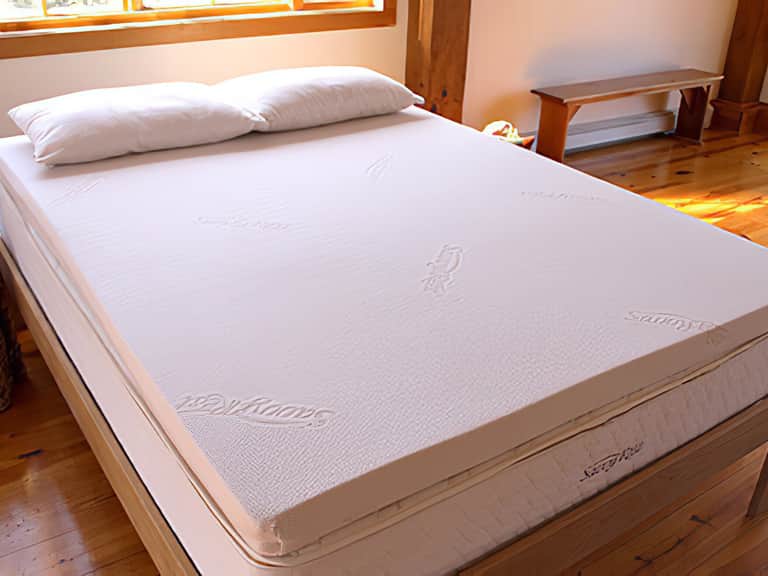
For example, the Savvy Rest Vitality Latex Mattress Topper is described as a three-inch layer of soft natural Talalay latex in an organic cotton stretch-knit cover. Those specifications illustrate several details worth comparing: latex process, layer height, stated firmness, and the material that encases the foam. As a topper, it should be assessed as an addition to a mattress, not as evidence of how a complete mattress from the same material would feel.
Before adding any topper, check the mattress’s age and support. A new layer can change surface comfort, but it cannot reliably restore a sagging core or correct a damaged foundation. Also check fitted-sheet depth, topper attachment, and care instructions. A thicker comfort layer can affect the way sheets fit and may shift if it is not secured appropriately.
Questions to ask when comparing organic mattresses
A disciplined comparison starts with clear, specific questions. Product descriptions can use similar language while referring to different constructions, so gather information in a consistent order.
- What does “organic” cover? Identify the certified components, the standard, and the scope of the certification.
- What is the latex made from? Ask whether it is natural, blended, or synthetic, and whether the supplier identifies the latex process.
- How is the mattress layered? Request the thickness and firmness of each layer, including the support core and any transition layers.
- What is the cover made of? Learn whether it is removable, whether it contains quilting or other fibers, and how it should be cleaned.
- What does the warranty cover? Read the terms for impressions, defects, and required foundation types. A warranty is not a forecast of how comfortable the bed will remain.
- How does the trial work? Check the trial length, return conditions, transport requirements, and any fees before relying on a comfort guarantee.
- Can the layers be changed? Some designs allow firmness adjustments; others are fixed. Understand what can actually be replaced or rearranged.
Care, longevity, and practical limits
Latex is resilient, but it still needs appropriate support and care. Use a foundation that meets the mattress maker’s requirements, protect the surface from spills, and follow the specific instructions for rotating or turning the mattress. Not every model is designed to be flipped. Avoid folding or bending a latex layer unless the manufacturer says it is safe, and do not assume that a removable-looking cover is machine washable.
Natural materials can have a scent when new, and sensitivity varies. Ask the manufacturer about airing guidance and the materials used in the finished product. People with a known latex allergy should consult a qualified health professional and seek precise information about the product’s construction and exposure pathways rather than relying on general marketing language. Contact a manufacturer directly when a specification is unclear.
Durability depends on density, construction, use, support, and care. A material’s natural origin does not guarantee a particular lifespan. Nor does a higher price, a thicker profile, or an organic label independently establish that a mattress will last longer. Transparent specifications and realistic warranty terms are more useful than broad claims.
A comparison checklist for a better decision
When two mattresses sound alike, put their details side by side. Start with the materials, then consider what the design is meant to do. The aim is not to find a universally ideal latex mattress; it is to find a coherent construction that fits your body, room, and preferences.
- Record the latex type, source description, and any available composition information.
- Note the firmness and thickness of each layer, not only the overall mattress rating.
- Check whether the cover, quilting, and protector may soften or change the surface feel.
- Consider your main sleeping position, pressure points, and preferred ease of movement.
- Review ventilation requirements and the foundation recommended for the mattress.
- Separate verified certification details from general claims about purity or wellness.
- Compare trial, return, care, and warranty terms before making a final choice.
The bigger picture
Natural latex can bring a recognizable blend of spring, cushioning, and recovery to an organic mattress. Yet material names are only the opening line. Latex type helps explain the foam; layer design helps explain where and how it yields; the cover and foundation shape the experience around it. Airflow and pressure relief emerge from the complete construction, and comfort remains personal.
The most useful comparison is therefore specific. Look for the composition, certification scope, layer map, and care requirements. Consider how the mattress feels for your sleeping position and whether the seller’s trial terms allow a realistic assessment at home. With those facts in hand, “natural latex” becomes more than an appealing phrase: it becomes a material choice that can be evaluated in the context of the whole sleep system.
Frequently asked questions
Are all natural latex mattresses organic?
No. Natural latex describes a material made from rubber-tree sap, while organic refers to claims and certifications with a defined scope. Verify which components are certified and under which standard.
Does latex always sleep cooler than other foams?
Not necessarily. Latex structure may support airflow, but the cover, quilting, sheets, room climate, and individual heat needs also matter. “Breathable” is not a guarantee of a cool sleep experience.
Is a softer latex mattress better for side sleepers?
Some side sleepers prefer more give at the shoulders and hips, but comfort depends on body proportions, layer design, and personal preference. A mattress that feels soft at the surface still needs suitable underlying support.
Can a latex topper fix an uncomfortable mattress?
A topper may adjust the feel of a mattress that is structurally sound but too firm. It is unlikely to correct a sagging or damaged support core, so assess the mattress and foundation before adding a comfort layer.