Bedding · Materials & Care
Wool Mattress Layers: Temperature Balance, Stitching, and Care
A wool layer can soften a bed without asking it to become something else. Its breathable fibers, quilted construction, and method of attachment all shape how it feels—and how well it holds up to years of sleep.
A mattress is not always the final word on comfort. Sometimes it is too firm, too warm, or simply in need of a little cushioning. A wool mattress layer—a topper or pad placed over the mattress—offers one way to adjust the sleep surface without replacing the bed itself. The change can be subtle: a softer first impression, a drier-feeling surface, or a more even layer between the sleeper and the mattress.
Wool has a particular appeal because it does more than add padding. Its fibers can absorb and release moisture, helping manage the small changes in humidity that occur around the body during sleep. The resulting effect depends on the construction, the amount of wool, the mattress beneath it, and the room’s conditions. Wool is not a thermostat, and it cannot guarantee a cool night or solve every comfort problem. But in a well-made layer, its natural properties can contribute to a more balanced sleep climate.
The details matter. Quilting determines how the filling is held in place. Straps, elastic, or a fitted design affect whether the layer stays put. Care instructions influence how easily it can be refreshed and how long it keeps its shape. Knowing what to look for turns a wool mattress layer from a vague promise of softness into a practical bedding decision.
What a wool mattress layer actually does
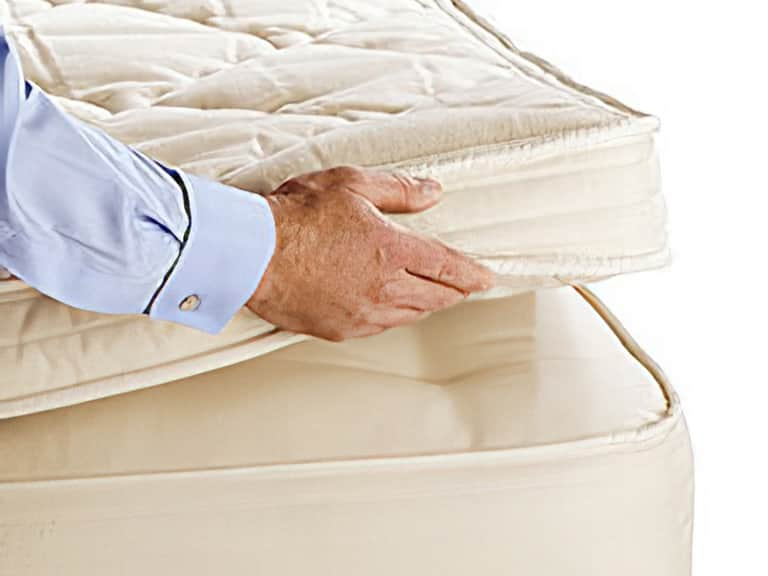
A wool mattress layer is a separate textile layer designed to sit on top of a mattress. It may be called a mattress topper, wool topper, or wool mattress pad, though those labels do not always mean precisely the same thing. A topper is often thicker and intended to change the feel of the bed; a pad may be thinner and more focused on light cushioning or surface protection. Names vary between makers, so construction and measurements tell a more reliable story than the label alone.
Wool fibers have a crimped structure that traps air. In bedding, that structure creates a springy, gently cushioning feel rather than the deep, slow contouring associated with some foam. Wool can compress under the body and recover to a degree, but it generally does not create a dramatic change in support. Someone seeking a major adjustment to mattress firmness or pressure relief should look carefully at thickness and fill, and should not assume that every wool layer will provide the same effect.
Wool is also hygroscopic: it can take up moisture vapor and release it as surrounding conditions change. That moisture management may help the sleep surface feel less clammy. It is one reason wool is used in bedding intended for varied seasons. Still, the overall temperature experience involves more than one material. Mattress construction, sheets, blankets, sleepwear, room temperature, and individual physiology all play a part.
For a useful comparison, consider the layer as part of a system. A breathable wool fill can only do so much if it is enclosed by materials that restrict airflow or if the bed is covered with several heavy layers. Conversely, a relatively light topper may be enough when the mattress is sound and the goal is a small adjustment rather than a full transformation.
Temperature balance without extravagant claims
“Temperature regulating” is a phrase often applied to wool, but it is best understood as a description of how a fiber interacts with moisture and air—not as a promise that the bed will stay at one ideal temperature. People warm and cool during the night. A breathable layer may help reduce the sensation of trapped dampness, while the air held within wool can contribute to insulation when the room is cool.
The same layer may therefore feel comfortable in more than one season, although it will not suit every sleeper or climate equally. Someone who tends to feel hot may appreciate a dry, breathable surface but still find a thick wool topper too warm. Someone who is frequently cold may value the insulation, especially when paired with lighter sheets and a suitable blanket. The right balance is personal, and the best test is not a marketing phrase but the combination of materials and the conditions of the bedroom.
Fill quantity has a noticeable influence. A light, low-profile wool pad can add a little softness while preserving much of the mattress’s original feel. A loftier layer can create a more cushioned surface, but may also change how sheets fit and how the bed feels when getting in and out. Compare stated height, wool weight where available, and the manufacturer’s description of intended use. Two products both called “wool toppers” may be very different in thickness and firmness.
Wool should not be treated as a substitute for clinical care or a guaranteed solution for night sweats. Persistent overheating, discomfort, or sleep disruption may have causes beyond bedding. In those cases, changing the bed can be one practical adjustment, but it is not a diagnosis.
Quilting: the quiet architecture of comfort
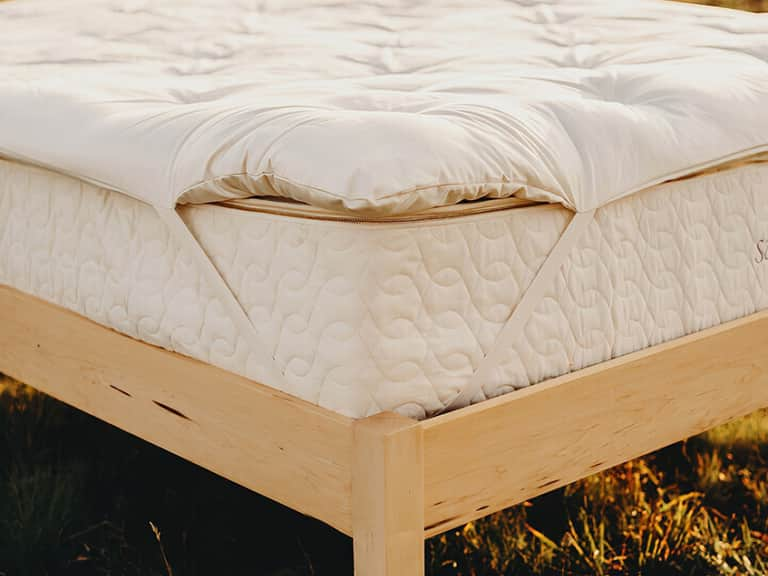
From the outside, a quilted wool mattress layer can look simple: a fabric shell, a soft filling, and a pattern of stitches. Those stitches do important work. They help keep the wool distributed rather than allowing it to migrate into lumps or empty pockets. Even distribution supports a more consistent feel across the surface and can reduce the tendency for the fill to shift during regular use.
Quilting patterns vary. Closely spaced stitching may hold the filling in smaller sections, while larger channels or compartments can allow a loftier appearance. Construction alone does not determine quality; the strength of the fabric, stitch integrity, amount of fill, and finishing all matter. Look for seams that appear secure and an overall surface that is reasonably even. A little natural variation in wool is expected, but pronounced thin spots, loose stitching, or areas where fill has migrated deserve attention.
Some layers are quilted through the full assembly. Others may use tufts, ties, or a combination of methods to anchor the wool. These approaches can affect flexibility and the way the layer settles over the mattress. A topper intended to be turned or rotated should be constructed to tolerate that handling. If a maker specifies that one side faces up, follow those instructions rather than assuming the layer is reversible.
For a real-world example of the format, the Savvy Rest Natural Savvy Woolsy Mattress Topper is described as natural wool in a quilted organic cotton cover, with corner straps and an approximately three-inch profile. Those features illustrate how fill, casing, and attachment combine in a wool mattress topper; they do not mean that every sleeper needs the same height or construction.
Stitching is also part of longevity. Repeated compression and movement put stress on both the quilting and the fabric shell. A robust seam can help the layer retain its structure, but no stitch pattern makes wool immune to gradual compression. A topper used nightly will change over time, just as other bedding does.
Fit and attachment: keeping the layer in place
A topper that slides or bunches can interrupt the very comfort it is meant to provide. Before choosing one, check the mattress dimensions—width, length, and depth—and compare them with the topper’s size. Standard labels such as queen or king are useful starting points, but mattress dimensions and product sizing can vary. A close match helps the layer lie flat and makes it easier to secure beneath the bedding.
Attachment methods commonly include corner straps, elastic, a skirt, or a loose lay beneath the mattress pad and fitted sheet. Straps can anchor the corners while leaving the sides open. A fitted design may wrap around the mattress, though its depth must accommodate the mattress and any existing layers. A loose topper may stay in place under a snug mattress pad and fitted sheet, but the complete stack can become difficult to fit if the sheet’s pocket depth is limited.
Think about all the layers, not just the topper. A wool mattress layer can add height to the bed, and a deep fitted sheet may be necessary to cover the mattress, topper, and any pad above them. A sheet pulled too tightly can compress the wool and strain its corners; one that is too loose may wrinkle or shift. The aim is a secure fit without excessive tension.
After making the bed, smooth the topper from the center toward the edges and check that straps are not twisted. If the layer moves during the night, first look at compatibility: an undersized fitted sheet or an overly slick fabric beneath the topper may be contributing. Avoid improvised pins or fasteners that could damage the casing or create a hazard.
Care begins with the label
Wool bedding can be durable, but it is not automatically machine washable. The fill, casing, quilting, and finishing determine what a particular product can tolerate. Care instructions should be treated as part of the design, not as fine print to revisit after a spill. Some wool mattress layers are spot-clean only; others may allow limited washing under specific conditions. When in doubt, follow the maker’s directions rather than applying a general wool-care rule.
For routine upkeep, keep the topper covered with a clean mattress pad or another suitable protective layer if the maker recommends it. This reduces direct exposure to skin oils, perspiration, and accidental spills. Wash the protective bedding regularly according to its own instructions. Airing the topper in a dry, well-ventilated place can help it feel fresher between deeper cleaning, but avoid prolonged exposure to harsh direct sunlight unless the care guidance explicitly permits it.
For a small spot, act promptly but gently. Blot rather than rub, using a clean cloth to lift moisture from the surface. Rubbing can push a stain deeper or disturb the wool. Use only cleaning methods compatible with the product’s instructions; excess water can be difficult to remove from a dense layer and may leave it damp for too long. Do not return bedding to the mattress until the affected area is completely dry.
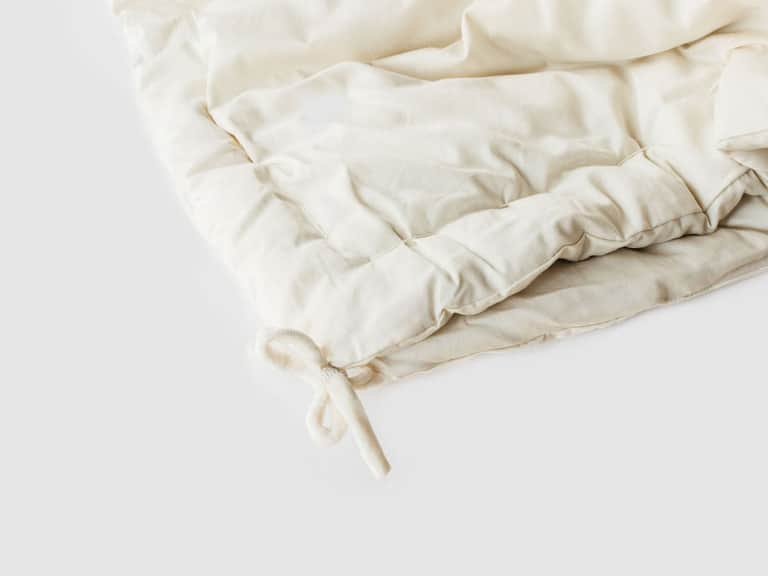
Some wool-filled products specify a limited wash method. For example, care guidance for a separate wool comforter may permit a cold-water soak-and-spin approach while prohibiting an ordinary wash cycle and machine drying. That instruction applies to that item, not automatically to a wool mattress topper. A topper is larger, more structured, and may use different materials; transferring care directions from one product to another can damage it.
Never assume that a household washer or dryer can safely handle a large wool layer. The weight of a wet textile can strain a machine, while heat and vigorous agitation may shrink, felt, or distort wool. If professional cleaning is allowed or necessary, confirm the recommended method with the manufacturer or a qualified cleaner before proceeding.
Turning, rotating, and restoring an even feel
Where the design allows it, turning or rotating a wool mattress layer periodically can help distribute wear. The exact routine depends on construction. A topper with a designated top and bottom should not be flipped; one that is not reversible may only be rotated from head to foot. Check the label before moving it, and do not force a rotation that conflicts with the attachment system.
When rotation is permitted, a simple schedule is more useful than an elaborate one: choose a regular interval that is easy to remember, such as during a bedding change, and inspect the surface at the same time. Look for compressed areas, shifting fill, loose threads, and signs of moisture. Gentle smoothing by hand may help restore an even surface, but vigorous beating or pulling can stress the seams.
Some compression is normal. Wool responds to repeated pressure, especially around the areas that carry the most weight. The rate and degree depend on fill, construction, use, and care. Rotating may make wear more uniform, but it cannot reverse all compression. If the layer no longer provides the cushioning it once did, or if it has developed persistent lumps or thin areas, its useful life may be ending.
Storage matters, too. If the topper must be put away, make sure it is fully dry and clean according to its care guidance. Store it in a breathable container in a dry space rather than sealing a damp layer in plastic. Avoid compressing it under heavy objects for long periods; extended pressure can flatten the fill and make the layer harder to restore.
How to decide whether wool is the right layer
Start with the problem you want to address. If the mattress is generally comfortable but feels a little hard at the surface, a wool layer may provide gentle cushioning. If the mattress has deep sagging, broken components, or uneven support, a topper is unlikely to correct the underlying issue. Adding a soft layer over a worn-out mattress can disguise a problem for a time without repairing it.
Next, consider your preferred feel. Wool tends to offer resilient, airy cushioning rather than the enveloping contour of slow-response foam. People who want a substantial change in firmness should compare materials and thicknesses carefully. Sleep position can also influence preference, but no single material is universally best for side, back, or stomach sleepers. Body shape, mattress firmness, and comfort preference all affect the result.
Then examine practical details: exact dimensions, profile, fill composition, cover fabric, attachment, warranty, and cleaning requirements. Ask whether the topper is reversible, whether it can be spot-cleaned, and what “rotation” means for that particular construction. If an item uses wool in a quilted casing, the stated height can give an idea of profile, but it does not tell the whole story. The distribution and density of the fill matter too.
Finally, assess the entire bedding system. A breathable topper is only one component among mattress, sheets, protective pad, duvet, and room conditions. For example, a fitted sheet made from a light, breathable fabric may feel different from a dense, brushed textile when used over the same wool layer. The point is not to build a perfect bed from labels, but to notice how the layers work together.
A practical checklist before purchase or use
- Define the goal: Decide whether you want slight cushioning, a more substantial plush feel, or surface protection.
- Measure the bed: Check mattress width, length, and depth, then confirm the topper’s dimensions.
- Review construction: Look at quilting, fill distribution, casing material, and whether the layer is reversible.
- Check attachment: Confirm straps, elastic, or fitted edges suit your mattress and bedding arrangement.
- Read care guidance: Note whether spot cleaning, washing, airing, or professional cleaning is allowed.
- Plan for sheet depth: Include the topper and any protective pad when assessing fitted-sheet fit.
- Set realistic expectations: Wool can add cushioning and help manage moisture, but it cannot repair a damaged mattress or guarantee a particular temperature.
These checks also help when comparing a wool mattress pad with a thicker wool topper. A thin pad may preserve the mattress’s original character while adding a modest layer. A loftier topper can make a more obvious change, but it also adds height and requires more care in fitting sheets and protecting the bed.
The lasting value is in the details
Wool mattress layers are not complicated, but they reward close attention. Their comfort depends on how much wool is used and how it is held in place. Their temperature feel depends on the wider bedding environment, not on fiber alone. Their longevity depends on fit, regular protection, gentle handling, and care that follows the product’s own instructions.
Quilting may be easy to overlook, yet it helps determine whether the filling remains evenly distributed. Attachment may seem like a minor feature until the layer shifts. A care label may feel procedural until a spill occurs. Together, these small decisions shape the nightly experience—and the years of use that follow.
The best wool mattress layer is not necessarily the thickest or the one described in the grandest terms. It is the one that meets a clear need, fits the mattress, suits the sleeper’s preferred feel, and can be maintained without guesswork. In bedding, comfort often arrives not as a dramatic transformation but as a measured improvement: a softer landing, a drier surface, and a bed whose materials make sense together.
Frequently asked questions
Does wool make a mattress topper cool?
Not in the sense of actively cooling the bed. Wool can manage moisture and hold air within its fibers, which may contribute to a comfortable sleep climate. The result varies with fill, thickness, room temperature, sheets, and personal preference.
Can a wool mattress layer be washed in a machine?
Only if the product’s care instructions say so. Many wool layers are spot-clean only, and heat or vigorous agitation can damage the fill or casing. Do not assume that instructions for a comforter or blanket also apply to a mattress topper.
Should a wool topper be flipped?
That depends on its construction. Some layers are reversible; others have a designated sleeping surface. Check the care label. If flipping is not permitted, the maker may allow rotation from head to foot instead.
How often should a wool topper be rotated?
There is no universal interval. Follow the manufacturer’s advice and rotate only if the design allows it. A regular, manageable schedule can help distribute wear, but rotation will not eliminate normal compression over time.