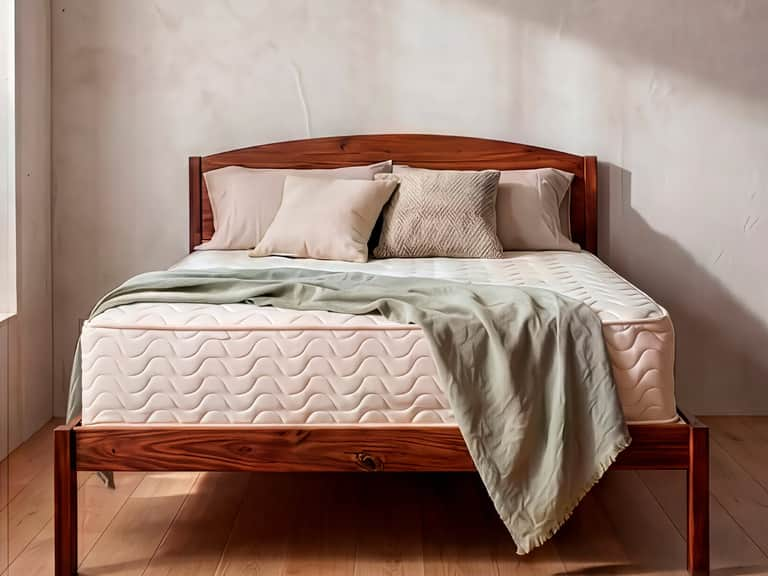
Hybrid mattresses combine the pressure-relieving qualities of a comfort layer with the responsive support of an innerspring coil system. This construction can suit sleepers seeking both cushioning and a more buoyant feel than some all-foam designs. Materials, layer thickness, and coil configuration influence firmness, motion transfer, temperature regulation, and overall support.
The Naturepedic EOS Pillowtop Organic Hybrid Mattress pairs an organic mattress design with a separate, plush pillowtop layer and a supportive coil base. Its layered construction is intended to provide cushioning at the surface while maintaining responsive support beneath the body. The modular design allows comfort components to be adjusted or replaced, supporting different preferences over time.
The Latex & Comfort Coil Mattress combines latex with a coil support system, bringing together latex’s springy response and the lift of individually responsive coils. Latex can contour gently without the slower-sinking sensation associated with some foams, while coils help distribute weight and encourage airflow. These characteristics may be relevant to sleepers considering pressure relief and ventilation.
When comparing hybrid mattresses, consider sleeping position, body weight, preferred firmness, and sensitivity to movement or heat. Side sleepers may prioritize cushioning around the shoulders and hips, while back and stomach sleepers often look for steadier alignment. Mattress materials can also matter to people evaluating organic mattresses, latex, and other bedding components for comfort and care.
A mattress works alongside pillows, sheets, and other bedding to shape the sleep surface. Properly fitted sheets should accommodate the mattress height, including any pillowtop, while pillows help support the head and neck according to sleeping position. Reviewing material composition, care instructions, and construction details can clarify how a hybrid mattress may function in a particular bedroom.
 Mattresses